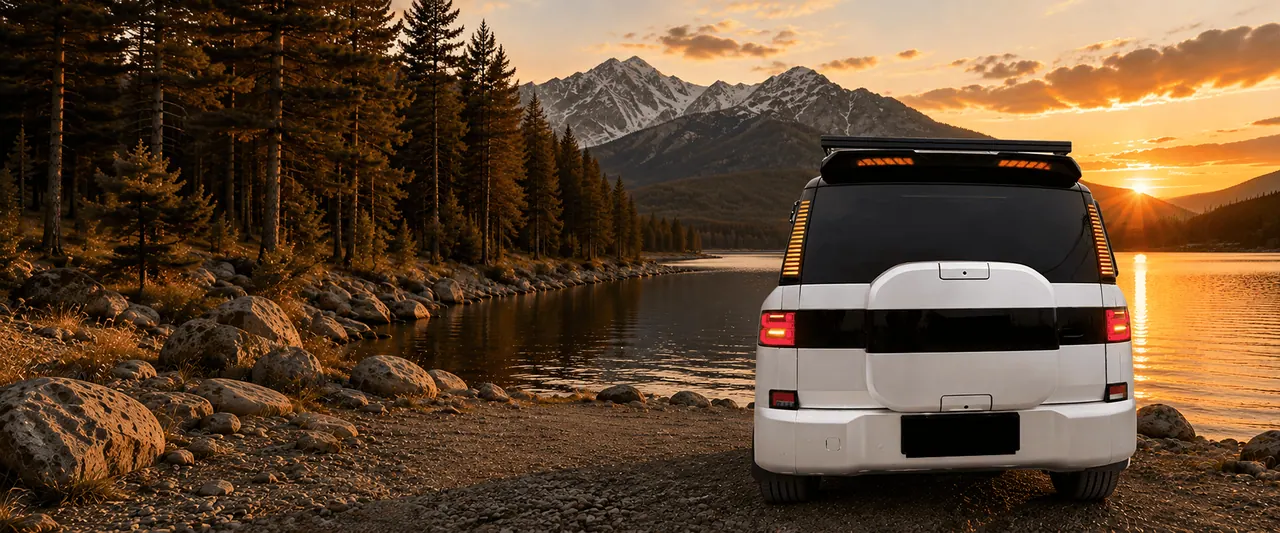
What Does a Spoiler Do on a Car? Types, Performance, Price and Manufacturer Guide
A spoiler is one of those car parts that seems easy to understand until you ask a more precise question. Is it there to push the car down, make it faster, reduce fuel consumption, or simply change the vehicle’s appearance? The honest answer is that a spoiler can influence all these areas—but not every spoiler does, and the result depends on the vehicle, the design and the way the part is installed.
A car spoiler manages airflow around the vehicle, usually by changing how air separates from the body at the rear, roof or front edge. A correctly developed spoiler may reduce aerodynamic lift, improve high-speed stability, manage drag or support a cleaner wake behind the vehicle. A styling spoiler may mainly change appearance. It should not be assumed to create useful downforce unless the complete vehicle-and-spoiler combination has been tested.
For everyday drivers, this distinction prevents unrealistic performance expectations. For distributors, tuning brands and automotive-parts importers, it prevents something more expensive: ordering a product that looks correct in a catalogue but does not fit the intended vehicle, survive transport or satisfy the target market.
What Does a Spoiler Do on a Car?
A spoiler changes the way air travels over, around or underneath a car. Its main aerodynamic purpose is usually to reduce unwanted lift, control airflow separation or modify drag. On many road vehicles, however, an aftermarket spoiler is designed mainly to improve appearance. The actual result depends on the car’s body shape, spoiler geometry, mounting position, speed and interaction with other exterior parts.
What Is the Short Answer?
As a car moves, the body displaces air and creates different pressure zones. Air may remain attached to a surface, separate from it or form a turbulent wake behind the vehicle. A spoiler introduces a deliberate edge, angle or obstruction that changes this process.
A rear deck-lid spoiler, for example, may make the airflow separate more cleanly from a sedan’s rear body. A roof spoiler on an SUV or hatchback may influence the air leaving the roof and entering the wake behind the tailgate. A front air dam may reduce the amount of high-energy air travelling underneath the vehicle.
The important word is may. The same spoiler shape can behave differently on two vehicles because roof angle, rear-glass angle, ride height, underbody flow and body width all affect the incoming air.
Does a Spoiler Create Downforce or Reduce Lift?
These expressions are often treated as interchangeable, but they are not always the same.
A production car may naturally generate positive aerodynamic lift at speed. If a spoiler reduces that lift, the vehicle can become more stable without necessarily producing net negative lift, or true downforce. A wing with an airfoil profile is more likely to be designed to generate downforce directly, usually with an accompanying increase in drag.
That distinction matters in product marketing. A manufacturer should not describe every decorative roof spoiler as a “high-downforce performance wing.” Without validated CFD, wind-tunnel or road-test evidence, a more accurate description is:
- Designed to manage rear airflow
- Developed for a vehicle-specific exterior upgrade
- Intended to reduce lift or improve stability when tested
- Styling-led product; aerodynamic performance not quantified
Who Actually Benefits from a Spoiler?
Different users buy spoilers for different reasons:
- Everyday drivers usually want a sportier or more complete exterior appearance.
- SUV and off-road owners may want a roof spoiler that integrates lighting or matches a wider body-kit design.
- Performance drivers may require measurable aerodynamic balance at defined speeds.
- Dealers and installers need repeatable fitment, clear mounting instructions and low return rates.
- Importers and wholesalers need stable supply, packaging efficiency and consistent finish.
- Private-label brands may require custom moulds, logos, colours and retail packaging.
The best product is therefore not automatically the part with the largest profile or most aggressive appearance. It is the part that matches the buyer’s real objective.
How Does a Car Spoiler Work, and When Does It Actually Matter?
A spoiler works by changing airflow direction, separation and pressure distribution around the vehicle. Its force increases rapidly with speed because aerodynamic force is approximately proportional to the square of air velocity. This means that a spoiler may have little measurable effect in slow urban driving but become more relevant at motorway or track speeds. There is no universal activation speed for a fixed spoiler.
How Does Airflow Create Lift and Drag?
A useful simplified aerodynamic relationship is:
Aerodynamic force = ½ × air density × velocity² × reference area × aerodynamic coefficient
The velocity-squared term is important. If speed doubles and the other factors remain constant, the aerodynamic force becomes roughly four times greater. This is why a part that feels irrelevant at 30 km/h may become significant at 120 km/h.
Two forces deserve particular attention:
- Lift acts vertically and can reduce the load carried by the tyres.
- Drag acts against the vehicle’s direction of travel and increases the power required to maintain speed.
A spoiler can reduce lift while increasing drag. It can also reduce both lift and drag on a particular vehicle if it improves airflow separation and wake behaviour. Published wind-tunnel and CFD research confirms that the result depends on the complete configuration—not the word “spoiler” alone. An SAE study on front and rear spoilers found that these parts can alter lift, drag and pressure distribution, while later research showed that rear-lift reduction and crosswind behaviour can also be connected.
When Does a Spoiler Start Working?
A fixed spoiler technically interacts with airflow whenever the vehicle is moving. The better question is when the effect becomes large enough to measure or feel.
There is no responsible universal answer such as “every spoiler starts working at 60 mph.” The result depends on:
- Vehicle shape and frontal area
- Spoiler height, length and angle
- Airflow reaching the spoiler
- Vehicle speed and yaw angle
- Front-to-rear aerodynamic balance
- Ride height and underbody design
- Crosswind and road conditions
An active spoiler can be programmed to deploy at a defined speed, but that deployment point is a vehicle-control decision, not a universal law of aerodynamics. Modern active systems use different positions to balance efficiency, stability and braking behaviour. A 2024 SAE study on active rear-spoiler deployment illustrates why engineers evaluate both static positions and transient movement.
Why Rear-Only Modifications Need Care
Adding rear aerodynamic load is not always an isolated improvement. A strong rear wing can shift the car’s aerodynamic balance rearwards. That may increase rear grip, but it can also make the front axle relatively light at speed if the rest of the package is not considered.
A serious performance project therefore evaluates:
- Front and rear lift balance
- Drag penalty
- Mounting strength
- Suspension and tyre setup
- Cooling airflow
- Braking stability
- Straight-line and crosswind behaviour
For normal styling products, buyers should simply avoid treating an untested visual upgrade as a guaranteed performance device.
What Does the History of Car Spoilers Teach Us?
Spoilers became closely associated with racing and performance cars during the 1960s, when higher speeds made lift and stability harder to ignore. The idea later moved into production vehicles, fuel-efficiency development and active aerodynamic systems.
The main lesson is not that every modern car needs a racing wing. It is that effective aerodynamic parts are developed for a specific flow problem. Today’s best factory spoilers are often less dramatic than older racing designs because they work with the roofline, rear glass, underbody and vehicle-control system rather than acting as an isolated decoration.
Spoiler vs Wing vs Diffuser vs Front Lip: What Is the Difference?
A spoiler changes or disrupts airflow that is already following the vehicle body. A wing is an airfoil positioned in the airflow to generate an aerodynamic force, usually downforce. A diffuser manages expanding underbody airflow, while a front lip or splitter influences air entering the front and underside of the car. They may work together, but they are not interchangeable parts.
| Component | Main location | Primary role | Common purchasing risk |
|---|---|---|---|
| Rear spoiler | Boot, tailgate or roof edge | Manage separation, lift or styling | Assuming all spoilers create downforce |
| Rear wing | Elevated on uprights | Generate downforce | Weak mounting or excessive drag |
| Front lip | Lower bumper edge | Manage front airflow and appearance | Ground-clearance damage |
| Splitter | Projects forward from the lower front | Create pressure difference and front load | Structural mounting requirements |
| Diffuser | Rear underbody | Manage expanding underbody airflow | Decorative shapes without useful underbody flow |
| Side skirt | Vehicle sides | Limit side-air interaction with the underbody | Poor fitment and road-clearance issues |
Spoiler vs Wing
A low-profile boot-lid or roof spoiler normally follows the vehicle body closely. It changes the point at which air separates from that body. A wing is usually raised on uprights so air can flow around both its upper and lower surfaces.
A properly designed wing can produce meaningful downforce, but that force must be carried through its mounting points. Fixing a large wing only to thin outer sheet metal or an unsupported plastic panel can create fatigue, vibration, water ingress or panel distortion.
Rear Spoiler vs Roof Spoiler
The correct position depends on the body style:
- Sedans commonly use boot-lid lip, ducktail or pedestal spoilers.
- Hatchbacks often use roof spoilers or upper-tailgate extensions.
- SUVs commonly use roof-edge spoilers, sometimes with integrated lights.
- Coupes may use boot spoilers, wings or active aero.
- Pickup trucks require a different airflow and mounting assessment from passenger cars.
A roof spoiler designed for one hatchback should not be treated as universal simply because another vehicle has a similar rear window.
Diffusers and Front Lips Are Not Rear Spoilers
A diffuser needs suitable underbody airflow and geometry to work as more than decoration. A front lip may reduce air entering underneath the car, but it can also lower ground clearance. Side skirts, front splitters and rear spoilers can be part of a balanced package, yet adding more components does not automatically improve aerodynamics.
More parts are not the same as better engineering.
Which Type of Car Spoiler Is Best for Each Vehicle and Buyer?
The best spoiler is the one that fits the exact vehicle, meets the buyer’s styling or aerodynamic objective, installs safely and remains commercially practical. For most road-car buyers, a vehicle-specific ABS or PP spoiler offers a useful balance of fitment, weight, durability and price. Carbon fibre suits premium or performance programmes, while universal wings require more installation and structural scrutiny.
Main Types of Car Spoilers
Lip spoiler: A low-profile extension attached to a boot lid or tailgate edge. It offers a subtle appearance and can be easier to package.
Ducktail spoiler: A more pronounced upward extension, often integrated closely with the boot or rear panel.
Pedestal spoiler: A raised product with supports. Some are primarily styling parts; others resemble functional wings.
Roof spoiler: Mounted at the upper edge of a hatchback or SUV tailgate. It can include lighting or decorative inserts.
Window spoiler: Positioned above or below rear glass, generally for styling and local airflow management.
Active spoiler: Moves according to speed, braking mode or vehicle settings. It requires mechanical, electrical and control-system integration.
Universal wing: Designed for multiple vehicles rather than one exact application. It can reduce tooling requirements but transfers more fitment and mounting responsibility to the installer.
Which Material Is Best?
| Material | Main advantages | Main limitations | Best suited to |
|---|---|---|---|
| ABS | Good surface quality, impact resistance, production repeatability | Tooling required; grade and thickness matter | Volume aftermarket and model-specific spoilers |
| PP | Tough, flexible and widely used in exterior parts | Surface preparation and dimensional control need attention | Larger exterior components |
| Fibreglass/FRP | Lower tooling barrier and easier for low-volume custom work | More manual variation; can crack if poorly made | Custom styling and limited production |
| Carbon fibre | Low weight, high stiffness, premium appearance | Higher price; finish and lay-up quality vary | Premium and performance programmes |
| Aluminium | Suitable for universal wing structures and brackets | Can look less integrated; mounting load must be managed | Adjustable wings and motorsport styling |
Material names alone are not a quality guarantee. Buyers should also specify:
- Material grade
- Nominal wall thickness
- Reinforcement locations
- Surface system
- UV and weather expectations
- Mounting hardware
- Acceptable dimensional tolerance
- Packaging method
“Carbon look” normally means a film, printed pattern or decorative finish over another substrate. It should not be described as real carbon fibre.
Vehicle-Specific vs Universal Spoilers
A vehicle-specific spoiler should be designed around the target mounting surface and body contour. This usually improves alignment and reduces installer adjustment. It still requires confirmation of model year, body version and market specification.
A universal spoiler can serve a wider range of applications but requires the installer to decide placement, hole position, sealing and structural reinforcement. Universal does not mean “fits every car without modification.”
For B2B distribution, vehicle-specific products normally support clearer listings and fewer customer disputes. Universal products may simplify inventory but create more installation responsibility.
Which Type Is Best for B2B Buyers?
- Choose existing model-specific ABS products for price-sensitive wholesale and broad distribution.
- Choose PP or reinforced plastic parts where size, impact resistance and flexibility matter.
- Choose real carbon fibre for premium positioning and buyers who will pay for material authenticity.
- Choose custom mould development when the target model has sufficient demand and current products do not meet the required design.
- Choose sample-led small orders when testing a new market, but confirm how bulk pricing and packaging change at volume.
Do Car Spoilers Really Improve Performance, Safety or Fuel Economy?
A properly engineered spoiler can reduce rear lift, improve stability or manage drag, but an untested aftermarket spoiler may deliver only a visual change. Some configurations reduce lift at the cost of higher drag; others can improve lift and drag together. Spoilers do not automatically make a car faster, safer or more efficient. The vehicle-specific test result is what matters.
Do Spoilers Make Cars Faster?
Reducing lift may help maintain tyre loading and stability at speed, but increased drag can reduce top speed or acceleration. A race car may accept extra drag because faster cornering or braking produces a better lap time. A road car may prioritise quietness, fuel efficiency and predictable crosswind behaviour instead.
“Faster” therefore needs a definition:
- Higher maximum speed?
- Faster cornering?
- Shorter lap time?
- Better straight-line stability?
- More confidence in crosswinds?
A spoiler can support one target while working against another.
Are Spoilers Effective in Normal Driving?
At low urban speeds, aerodynamic forces are relatively small. Most drivers will notice appearance before they notice a physical aerodynamic effect. At higher speeds, the effect grows rapidly, but whether it is beneficial still depends on design.
This does not make styling spoilers useless. Appearance is a legitimate product function. The problem begins when a decorative part is sold with unsupported safety or performance claims.
Can a Spoiler Improve Fuel Economy?
It is possible for a well-developed spoiler to improve wake separation and reduce drag on a particular body shape. It is also possible for a large or poorly positioned device to increase drag.
Research on road vehicles shows both outcomes. One study of a hatchback model found that a strip spoiler could reduce both drag and lift, while a wing produced a larger lift reduction with a drag penalty. The result is a useful warning: spoiler geometry must be matched to the vehicle.
No responsible supplier should promise a universal fuel-saving percentage without controlled, vehicle-specific test data.
Can an Incorrect Spoiler Cause Problems?
Poorly selected or installed spoilers can create:
- Wind noise and vibration
- Cracked paint or body panels
- Water leakage around drilled holes
- Boot or tailgate imbalance
- Interference with antennas, cameras or rear wipers
- Wiring faults in illuminated products
- Reduced rear visibility
- Added drag without useful stability
- Warranty or local-compliance concerns
Before ordering, confirm not only whether the part “fits” but what fitment actually means: correct contour, correct mounting points, correct clearances and correct function.
How Much Does a Car Spoiler Cost, and How Long Does Installation Take?
Car spoiler price depends on material, vehicle application, finish, lighting, tooling and quantity. Current public Chinese factory listings show simple ABS products from roughly US$9–50 per piece, complex or illuminated SUV spoilers from about US$40–140, and real carbon-fibre products from around US$75 to several hundred dollars. These are sourcing references, not delivered retail prices.
| Product type | Indicative public factory listing | Common published MOQ | Important exclusions |
|---|---|---|---|
| ABS lip, boot or roof spoiler | US$9–50 | 1–30 pieces | Freight, duty, paint and installation |
| Illuminated SUV spoiler | US$40–140 | 1–10 pieces | Wiring specification and market compliance |
| Carbon-fibre boot spoiler | US$75–250 | 1–5 pieces | Weave, coating and fitment variation |
| Large carbon wing | US$300–750+ | 1–5 pieces | Brackets, structural installation and freight |
| New custom design | Project quotation | Project-specific | Design, prototype, tooling and revisions |
Public prices vary by model, order quantity and platform promotion. Always request a dated quotation with trade terms.
What Determines the Real Price?
A low unit price does not always produce the lowest landed cost. B2B buyers should evaluate:
- Product price
- Sample cost
- Mould or tooling charge
- Paint and finish
- Mounting hardware
- Individual packaging
- Carton dimensions and gross weight
- Inland freight
- Export handling
- International freight
- Import duty and tax
- Defect allowance
- Repacking or relabelling cost
- Installation-support cost
Large spoilers are light but volumetric. A small reduction in carton size can sometimes matter more than a small reduction in unit price.
Factory Spoiler vs Aftermarket vs Custom
A factory-style replacement aims to match an established vehicle appearance and installation method. A ready-made aftermarket spoiler offers faster entry and lower development cost. A custom spoiler creates stronger product differentiation but adds tooling, approval and demand risk.
Custom development makes sense when the buyer has:
- A defined vehicle application
- Clear annual demand
- Exclusive design requirements
- Target material and finish
- A controlled approval process
- A plan for tooling ownership
- A market capable of supporting development cost
How Long Does Installation Take?
Use the following as planning ranges, not fixed promises:
- Adhesive lip spoiler: approximately 30–90 minutes, plus adhesive curing time.
- Pre-drilled bolt-on spoiler: around 1–3 hours when mounting points align.
- New drilling and sealing: often 2–4 hours, depending on access and reinforcement.
- Illuminated spoiler: commonly 3–6 hours when wiring must be routed and tested.
- Painting and curing: can add one to three working days.
The installer should always dry-fit the part before drilling or applying adhesive.
How Are Car Spoilers Made? A Guide to the Factory and Custom Development Process
A professional spoiler project begins with vehicle identification and product requirements, not with mould cutting. The normal process covers fitment review, surface data, design, prototype approval, tooling, trial production, finishing, assembly, inspection and packaging. Custom projects should use approval gates so errors are found before mass production rather than repeated across an entire order.
A Practical Custom Spoiler Process
-
Vehicle and market confirmation
Confirm make, model, year, body style, trim and sales market. Request the VIN when appropriate, plus rear, side and mounting-area photographs. -
Requirement definition
Define spoiler type, styling direction, material, finish, lighting, installation method, expected quantity, target price and packaging. -
Reference-data review
The manufacturer reviews 3D data, scans, drawings, an original part, a customer sample or the physical vehicle. -
CAD development
Designers build the surface, mounting structure, clearance and assembly features. -
Prototype or first sample
A prototype checks proportion, contour and basic installation before final tooling decisions. -
Tooling and trial production
Tooling is manufactured, followed by first-off parts and controlled corrections. -
Vehicle installation approval
The sample is installed on the correct vehicle version. Gaps, alignment, opening functions, lighting and visual balance are reviewed. -
Surface and colour approval
The buyer approves texture, gloss, paint or carbon appearance under defined lighting. -
Packaging validation
The product is packed with vulnerable corners, painted surfaces and mounting tabs protected. A transport or drop test may be appropriate. -
Mass production and final inspection
Production follows the approved sample and documented acceptance criteria.
What Should the Factory Inspect?
Incoming material
- Material identity and supplier batch
- Colour and contamination
- Thickness or reinforcement inputs
Dimensional and fitment inspection
- Key contour dimensions
- Mounting-hole locations
- Bracket orientation
- Gap consistency
- Interference with doors, tailgates, cameras and wipers
Surface inspection
- Sink marks, waviness and deformation
- Scratches, dust and paint defects
- Gloss and colour consistency
- Carbon weave alignment and clear-coat quality
Functional inspection
- Light colour and voltage
- Connector and wire length
- Water sealing
- Tailgate opening
- Adhesive or fastener compatibility
Packaging inspection
- Correct accessories and instructions
- Surface protection
- Inner support and movement control
- Carton marking
- Carton size and gross weight
How Long Does Custom Development Take?
There is no credible universal lead time. Adapting an existing design can take weeks, while a new vehicle-specific product with scanning, CAD, tooling and several installation revisions can take months.
The buyer should request a gated schedule showing:
- Input-data approval
- Design-freeze date
- Prototype date
- Tooling completion
- First sample
- Vehicle trial
- Correction round
- Golden-sample approval
- Production and shipment
A shorter promised lead time is not automatically better. A schedule that omits vehicle trial and correction time may simply move the risk to the buyer.
Why Choose a China Car Spoiler Manufacturer for OEM, ODM and Wholesale Projects?
China is a practical sourcing base for car spoilers because it combines automotive-component clusters, mould development, plastics processing, carbon-fibre production, painting, packaging and export services. Buyers can find ready-made vehicle applications and custom programmes at different order levels. The advantage is choice and supply-chain density; the responsibility is careful supplier and fitment verification.
Main Sourcing Advantages
Broad vehicle coverage: Chinese suppliers serve European, Japanese, Korean, American and increasingly Chinese vehicle platforms.
Material options: Buyers can compare ABS, PP, FRP, real carbon fibre, aluminium and mixed-material designs.
Tooling access: Many suppliers can coordinate scanning, CAD, prototyping and mould development.
Flexible commercial entry: Published product MOQs range from one sample to dozens of pieces, depending on the factory and product.
Exterior-part bundling: A buyer may source spoilers together with front lips, grilles, diffusers, side skirts, mirror covers or body kits.
Packaging and private label: Custom cartons, labels, instructions and branding may be available once quantity requirements are met.
China Factory vs Trading Company
A factory may offer stronger control over tooling, processing and corrective action. A trading company may offer broader product consolidation, language support and lower transaction complexity across several factories.
Many suppliers operate as manufacturer-and-trading companies, so buyers should not rely on labels alone. Ask:
- Which processes are completed at the stated address?
- Which steps are subcontracted?
- Who owns the mould?
- Who controls the approved sample?
- Who handles defects and engineering changes?
- Can the buyer audit the production location?
The best business model depends on the project. Direct factory control matters most for custom tooling and repeatable production. Consolidation may matter more for buyers purchasing many low-volume exterior products.
Risks Buyers Must Control
- Incorrect model year or body version
- Product photos taken from a different application
- ABS confused with carbon-look ABS
- Unverified aerodynamic claims
- Unclear mould ownership
- Unapproved logo or vehicle-brand use
- Paint mismatch
- Weak tabs or brackets
- Unspecified lighting voltage
- Packaging damage
- Changes after sample approval
A low MOQ helps test a market, but it does not replace product validation.
Top 10 China Car Spoiler Manufacturers for B2B Buyers to Compare
The following list covers ten China-based spoiler and exterior-parts manufacturers serving different sourcing scenarios. It is a buyer-oriented comparison, not a universal quality ranking. Published MOQs are product examples visible on company or marketplace pages on 29 September 2026; they are not permanent company-wide terms. Buyers should reconfirm the exact model, specification, price and MOQ before ordering.
| Manufacturer | Main focus | Published MOQ example | Best fit for |
|---|---|---|---|
| Changzhou Yuxuan Vehicle Decoration | SUV and vehicle-specific exterior parts | 1 set | Emerging SUV applications and low-entry samples |
| Changzhou Haosheng Vehicle Parts | Broad ABS spoiler catalogue | 30 pieces | Established wholesale programmes |
| Changzhou Bentuo Auto Parts | European-model styling parts | 2 sets | Small trial orders and mixed catalogues |
| Changzhou Shijun Automobile Decoration | Chinese SUV and off-road exterior parts | 1 piece | Tank, Haval, Jetour and similar applications |
| Danyang Zhuoyi Vehicle Parts | Carbon and mixed tuning products | 5 pieces | EV, sports and premium tuning distribution |
| Foshan Teqimei Auto Parts Manufacturing | Broad multi-brand ABS exterior accessories | 10 pieces | Mainstream model coverage |
| Guangzhou Car Beauty Exterior Auto Parts Manufacturing | ABS spoilers and roof products | 1 piece | Sample-led ABS sourcing |
| Changzhou Haomu Vehicle Parts | Spoilers, grilles and custom mould development | Not publicly standardised | OEM and custom-mould discussions |
| Guangzhou JSKracing Auto Accessories | Carbon-fibre and fibreglass aero parts | 1 piece | Premium and performance programmes |
| Dongguan Saibang Carbon Fiber Products Technology | Carbon-fibre body and aero components | 1 sample; custom MOQ may be higher | Premium carbon and custom development |
1. Changzhou Yuxuan Vehicle Decoration Co., Ltd.
Changzhou Yuxuan focuses on vehicle-specific automotive exterior parts, including spoilers and body-kit applications for SUVs and off-road-style vehicles.
- Published MOQ example: The BYD Leopard Ti7 LED rear spoiler is listed at 1 set.
- Professional focus: Vehicle-specific SUV exterior products, illuminated spoilers and project-based fitment review.
- Core strengths: Low entry quantity on selected products; fitment, market version, lighting, packing size and weight can be reviewed before quotation; useful for emerging Chinese vehicle applications.
- Buyer-visible limitation: MOQ and delivery data are product-specific. OEM/ODM, tooling, certification and warranty terms are not standardised across the public catalogue and must be confirmed for each project.
- Best for: Distributors testing Tank, Haval, BYD, Jetour, Toyota SUV or similar vehicle-specific exterior products.
2. Changzhou Haosheng Vehicle Parts Co., Ltd.
Haosheng presents a large catalogue of rear spoilers, roof spoilers, front lips, side skirts and related exterior accessories.
- Published MOQ example: Multiple Haosheng spoiler listings show 30 pieces.
- Professional focus: Ready-made ABS vehicle applications and wholesale exterior-product programmes.
- Core strengths: Broad model coverage; dedicated spoiler catalogue; public references to samples, final inspection and packaging review.
- Buyer-visible limitation: A 30-piece product MOQ is less convenient for testing a slow-moving vehicle application. Its public profiles describe both manufacturing and trading activities, so process ownership should be confirmed.
- Best for: Distributors with validated demand and the ability to purchase by model in wholesale quantities.
3. Changzhou Bentuo Auto Parts Co., Ltd.
Bentuo, also associated with AMP-Z branding, lists spoilers, front lips, diffusers, bumpers and body-kit parts for many European vehicles.
- Published MOQ example: Its Made-in-China catalogue lists several spoilers at 2 sets.
- Professional focus: Gloss-black ABS exterior styling parts for Audi, BMW, Mercedes-Benz, Volkswagen, Škoda and other platforms.
- Core strengths: Low published MOQ for catalogue products; competitive entry pricing; suitable for mixed-SKU trial orders.
- Buyer-visible limitation: Public information is strongest on ready-made product listings. Buyers needing exclusive design, quantified aerodynamics or new tooling should request separate engineering evidence.
- Best for: E-commerce sellers, regional distributors and installers trialling European-model applications.
4. Changzhou Shijun Automobile Decoration Co., Ltd.
Shijun carries an extensive range of off-road and SUV exterior products, including spoilers, body kits, grilles, covers and illuminated components.
- Published MOQ example: Current Shijun spoiler listings include products at 1 piece.
- Professional focus: GWM Tank, Haval, Jetour and other Chinese SUV applications.
- Core strengths: Low sample entry; strong visibility in newer off-road vehicle accessories; catalogue includes complex and illuminated parts.
- Buyer-visible limitation: Material, wiring, warranty and installation details vary by listing. Buyers should not assume that one product’s conditions apply across the full catalogue.
- Best for: Importers building a product range around Chinese off-road and SUV platforms.
5. Danyang Zhuoyi Vehicle Parts Co., Ltd.
Zhuoyi offers carbon-fibre and plastic tuning parts, body kits and other vehicle accessories.
- Published MOQ example: Its public supplier page lists several spoilers at 5 pieces.
- Professional focus: Carbon-fibre spoilers, boot wings, EV tuning parts and mixed exterior upgrades.
- Core strengths: Mid-level trial MOQ; access to higher-value carbon products; product range covers both established performance cars and newer EV applications.
- Buyer-visible limitation: The catalogue extends beyond spoilers into interior and general tuning products, so buyers should verify which processes and materials are handled in-house.
- Best for: Tuning distributors seeking a mixture of carbon and conventional exterior products.
6. Foshan Teqimei Auto Parts Manufacturing Co., Ltd.
Teqimei lists spoilers, bumpers, mirror covers, fender flares, ladders, roof platforms and other exterior accessories.
- Published MOQ example: Many Teqimei rear spoiler listings show 10 pieces, although some company-level information mentions a five-piece minimum.
- Professional focus: Multi-brand ABS styling parts covering BMW, Toyota, BYD and other mainstream applications.
- Core strengths: Broad catalogue; visible product prices and delivery references; third-party supplier information is available.
- Buyer-visible limitation: Public company data identifies a relatively small and recently established operation. Capacity, subcontracting and simultaneous project limits should be checked for large programmes.
- Best for: Buyers wanting broad model coverage with moderate order quantities.
7. Guangzhou Car Beauty Exterior Auto Parts Manufacturing Ltd.
Car Beauty focuses on ABS car spoilers, roof spoilers, aluminium spoilers and roof racks.
- Published MOQ example: Its supplier profile lists many ABS spoilers at 1 piece.
- Professional focus: Blow-moulded ABS spoilers, lip spoilers, roof spoilers and related exterior products.
- Core strengths: Low sample MOQ; stated catalogue of more than 300 spoiler models; public reference to mould opening, spraying and OEM/ODM.
- Buyer-visible limitation: A broad, long-running catalogue may include different tooling generations and finish standards. Buyers should reconfirm stock condition, mould condition, colour standard and packaging for the exact SKU.
- Best for: Buyers who want to test existing ABS products before committing to larger quantities.
8. Changzhou Haomu Vehicle Parts Co., Ltd.
Haomu states that it manufactures grilles, rear spoilers, rear diffusers, front lips, fenders and related exterior accessories.
- Published MOQ example: No standard spoiler MOQ is published on the company’s public About page; quotation is required.
- Professional focus: Standard and non-standard automotive exterior parts, custom mould development and OEM projects.
- Core strengths: Haomu’s public company profile describes long-term automotive-component experience, custom mould support and a multi-brand product range.
- Buyer-visible limitation: Public purchasing information is limited. Sample policy, MOQ, tooling ownership, lead time and warranty need direct confirmation before comparison.
- Best for: Buyers prepared to discuss custom development rather than purchase only through fixed online listings.
9. Guangzhou JSKracing Auto Accessories Ltd.
JSKracing specialises in carbon-fibre and fibreglass exterior and performance parts.
- Published MOQ example: A universal carbon-fibre spoiler listing shows 1 piece.
- Professional focus: Carbon wings, spoilers, body panels and custom performance-oriented parts.
- Core strengths: Low sample entry for selected products; OEM/ODM and sample-based customisation are publicly listed; suitable for premium catalogues.
- Buyer-visible limitation: Carbon components cost much more than ABS products, and visible weave does not by itself prove structural quality. Buyers should specify lay-up, resin system, coating, weight and mounting load.
- Best for: Performance brands, carbon-parts distributors and premium vehicle-restyling businesses.
10. Dongguan Saibang Carbon Fiber Products Technology Co., Ltd.
Saibang is a verified carbon-fibre component manufacturer with spoilers, wings, body kits and other exterior parts.
- Published MOQ example: Existing carbon spoiler products may start at 1 piece or 1 set. Its supplier FAQ states that general custom-project MOQ can start around 100 units, depending on the product.
- Professional focus: Real carbon-fibre aero components, vacuum processes, custom design and premium vehicle applications.
- Core strengths: Public third-party facility information; specialised carbon equipment; sample availability; drawing- and sample-based customisation.
- Buyer-visible limitation: Catalogue samples and fully custom programmes have very different commercial thresholds. Buyers must separate sample MOQ, standard-product MOQ and custom-production MOQ in the quotation.
- Best for: Premium carbon programmes with enough margin and volume to support material, finishing and development cost.
How to Choose the Best Manufacturer
Do not choose a spoiler manufacturer from price and photographs alone. Ask each candidate for the same evidence:
- Business licence and production address
- Exact vehicle, model year, trim and market application
- Product code and revision
- Material specification
- Real product and installation photos
- Mounting method
- Sample availability
- MOQ at sample, pilot and bulk stages
- Carton dimensions and gross weight
- Defect standard
- Inspection report
- Warranty and claim procedure
- Mould ownership terms
- Production and shipment lead time
- Trade term and payment term
A professional comparison uses a controlled RFQ so every supplier answers the same questions.
What to Send for a Vehicle-Specific Spoiler Quotation
For a useful quotation, send:
- Vehicle brand and model
- Model year
- Body style and trim
- Sales market
- VIN or identification information where appropriate
- Rear and side vehicle photos
- Mounting-area photographs
- Reference design or drawing
- Required material
- Colour or surface finish
- Lighting and connector requirements
- Estimated order quantity
- Packaging requirements
- Destination country and port
- Target sample date
If you are sourcing a vehicle-specific rear spoiler, illuminated roof spoiler or custom exterior project, send Yuxuan the vehicle information, reference images and expected quantity first. A precise brief allows the product, fitment, packaging and commercial terms to be reviewed before a quotation is issued.
Frequently Asked Questions About Car Spoilers
Top 10 buyer questions
1. How do I know whether a spoiler will fit my exact car?
Fitment must match the exact vehicle version, not just the model name. Send the make, model, production year, body style, trim, sales market and VIN or chassis code when available. Add clear photos of the tailgate or trunk lid, original mounting area, camera, antenna, rear wiper and brake light.
Before approving a bulk order, request at least one strong form of evidence: a vehicle installation photo, test-fit video, mounting-point drawing or physical sample. Regional versions of the same model can use different body panels or electrical connections, so a catalogue photo alone is not reliable fitment proof.
2. What should I send for an accurate spoiler quotation, and what affects the price?
A useful quotation needs the vehicle application, product specification, quantity, packaging and destination; otherwise, the first price is only provisional. Include the vehicle details, reference photo or drawing, material, finish, mounting method, lighting functions, sample quantity, bulk quantity, packaging type, delivery postcode or port, required date and Incoterm.
Ask the manufacturer to separate the following costs:
- Unit price and painting or special finish
- Sample, prototype, mould and fixture charges
- Installation hardware and branded packaging
- Inspection, freight and import-related costs
Compare saleable landed cost, not only factory unit price. A cheaper part can cost more after repainting, freight damage, poor fitment or customer returns.
3. Can I order a sample, and what is the typical MOQ for car spoilers?
Yes—sample orders are the safest way to approve fitment and quality, while MOQ depends on mould availability and the level of customization. Existing products may start from 1–10 sets; made-to-order colours, branded packaging, carbon-fibre work or new tooling usually require more.
Use the sample to check panel gaps, mounting points, surface defects, hardware, lighting and packaging. Keep one accepted unit as the golden sample for mass-production comparison. Confirm whether sample or tooling fees can be credited against a later order. Yuxuan’s BYD Leopard Ti7 LED rear spoiler currently has a one-set MOQ, but every model and custom project requires its own written MOQ confirmation.
4. Which spoiler material is best for wholesale: ABS, PP, fiberglass or carbon fibre?
ABS is usually the most balanced choice for mainstream aftermarket sales, but the best material depends on positioning, finish and return risk. Use PP for flexible OEM-style parts, fiberglass for lower-volume or large custom shapes, carbon fibre for premium lightweight products, and aluminium for adjustable motorsport-style wings.
| Material | Best use | Main buying check |
|---|---|---|
| ABS | Mainstream painted spoilers | Surface consistency and heat deformation |
| PP | Flexible OEM-style parts | Paint adhesion and surface treatment |
| Fiberglass/FRP | Low-volume custom designs | Manual finishing and fitment variation |
| Carbon fibre | Premium lightweight products | Construction method and visible weave |
| Aluminium | Adjustable wings | Bracket strength and corrosion protection |
Always clarify whether “carbon” means genuine carbon fibre, a carbon skin or only a printed pattern.
5. How should I check spoiler quality before bulk production?
Approve a physical sample and written inspection standard before mass production. The standard should cover material, dimensions, weight, mounting-point location, surface defects, colour, deformation, hardware, adhesive, LED functions and export packaging.
For a model-specific spoiler, actual vehicle test-fit evidence is more useful than measurements alone because it can reveal uneven gaps, rear-wiper contact or tailgate interference. Before shipment, request dated production and packing photos, random-unit measurements or an independent inspection. Also define how nonconforming parts will be handled. Clear acceptance criteria and traceable evidence provide more protection than broad claims such as “high quality.”
6. Can a manufacturer make a custom spoiler from a drawing, sample or vehicle?
Yes, a custom spoiler can be developed from accurate 3D data, technical drawings, a physical sample or direct vehicle measurement; photos alone are rarely sufficient for tooling. A typical project moves through design review, material selection, 3D modelling, prototype production, vehicle test fitting, revision, tooling and pre-production approval.
Before paying a tooling deposit, confirm mould ownership, design-file ownership, included revisions, storage terms, transfer rights and acceptance standards for panel gaps, symmetry, surface finish and mounting strength. Customization remains subject to engineering review: some existing spoilers, particularly illuminated model-specific parts, cannot be resized or modified economically without new tooling.
7. How long do spoiler samples and mass production take?
An in-stock sample may take 3–10 days, while a new custom spoiler can require 20–60 days or longer before mass production begins. General planning ranges are:
- Existing-mould sample: about 7–20 days
- Custom prototype and tooling: about 20–60+ days
- Mass production after approval: about 15–35 days
Actual timing depends on design data, vehicle access, mould complexity, paint matching, electronics, quantity and factory capacity. Ask what event starts the quoted lead time—deposit, drawing approval or sample approval—and list shipping time separately. Freeze the approved colour, hardware, carton artwork and inspection criteria before production to avoid preventable delays.
8. How are car spoilers installed, and do they require drilling?
Installation may use automotive adhesive, original holes, newly drilled holes, replacement panels or a combination of adhesive and bolts. Lightweight trunk lips often use tape, while larger wings need mechanical retention; illuminated spoilers also require wiring.
Always dry-fit the part before drilling or removing adhesive liners. Check alignment, tailgate clearance, rear-wiper travel, antenna position, camera view and lamp access. Request installation instructions, a hardware list and wiring diagram before purchase. Heavy, drilled or illuminated products should be fitted by a qualified technician because incorrect drilling can damage paint or cause water entry, while poor wiring can create faults or unreliable lighting.
9. What packaging is best for exporting car spoilers?
Good export packaging prevents movement, pressure and surface contact without creating unnecessary volumetric weight. Use a non-abrasive bag, shaped foam at strong support points, extra protection around tabs and corners, separated hardware, and a rigid outer carton. Large wholesale shipments may also need pallet protection.
Ask for the packed carton dimensions and gross weight before selecting courier, air or sea freight; spoilers are light but bulky, so freight is often charged by volume. For painted products, approve carton photos or a sample-shipment test, then make the packaging part of the purchase specification. A carton that looks intact can still contain a scratched or distorted part if internal support is poor.
10. What should buyers confirm before ordering an LED or illuminated spoiler?
Confirm electrical compatibility as carefully as physical fitment. Specify vehicle voltage, light colour, running-light, brake-light and turn-signal functions, static or sequential operation, connector type, cable length, wiring changes, waterproofing, control-module needs and destination-market regulations.
Request a real operation video showing every function; catalogue images cannot prove sequence, brightness or connector compatibility. Provide the supplier with the vehicle version, destination market, connector photo and desired light-sequence video. Also agree on how a failed lighting circuit will be replaced if the spoiler body remains usable. These checks reduce warning-light faults, installation disputes and expensive whole-unit replacements.